
One of the most common things we hear on the phone is some version of: I did not think Portland homes really got mold, but the wall is black. Portland is one of the moldiest metros in the country. Eight months of high outdoor humidity, tight modern envelopes, older Craftsman envelopes that leak vapor into wall cavities, and clay-soil crawl spaces all combine to give mold everything it needs.
This guide covers where mold actually grows in Portland homes, when to DIY, when to call a pro, what real IICRC S520 remediation looks like, and how Oregon and Washington insurance treats mold differently from water damage.
Why Portland is one of the moldiest metros in the country
From November through May, outdoor relative humidity in the Willamette Valley sits between 80 and 95 percent most of the day. Homes with tight modern envelopes trap indoor moisture from cooking, showering, and breathing. Older Craftsman and mid-century homes leak that moisture into wall cavities, unvented crawl spaces, and cold attic corners. Mold needs about 60 percent surface humidity and any organic food source. Portland gives it both, indoors and out.
Where mold actually grows in Portland homes
After thousands of remediation jobs across the Portland metro, the same locations come up again and again.
- Crawl spaces with damaged vapor barriers or standing water from clay laterals.
- North-facing bedroom corners where interior humidity condenses on cold exterior walls.
- Bathrooms with weak or missing exhaust fans (or fans vented into the attic, not outside).
- Behind drywall after a slow supply-line drip or a leaking dishwasher hose.
- Attics with roof leaks or bath fans terminating in the insulation instead of a roof cap.
- Basements after any atmospheric river event where the sump pump could not keep up.
When you should and should not DIY
EPA guidance is clear: mold growth covering more than about 10 square feet (a 3 by 3 patch) is a job for a professional, not a homeowner with bleach. Below that, on a hard non-porous surface, with proper PPE and ventilation, careful homeowners can sometimes handle it.
Always call a pro when mold is inside walls, ceilings, HVAC, or crawl space; when the water source was sewage or gray water; when anyone in the household has asthma, allergies, or immune issues; or when you can smell mold without seeing it.
What IICRC S520 remediation actually looks like
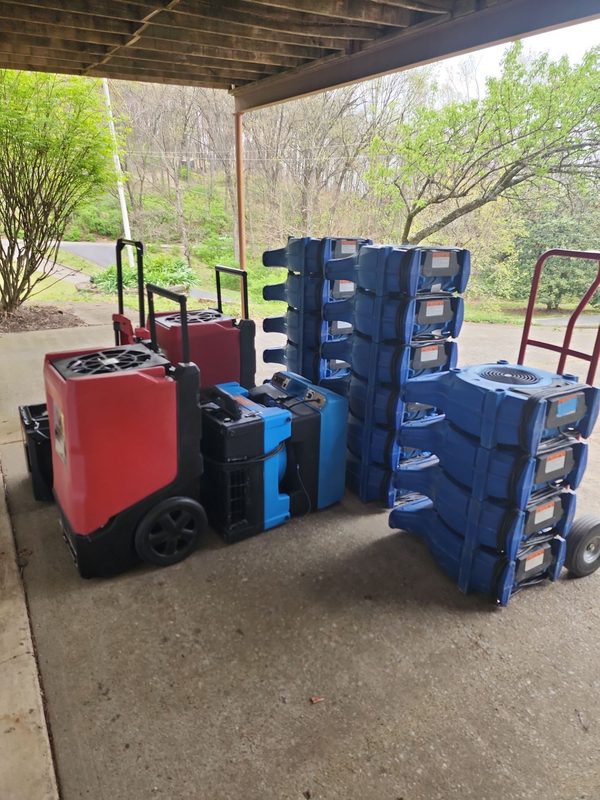
Real remediation is not spraying bleach. The IICRC S520 standard requires source control, containment with negative air pressure, HEPA filtration, removal of affected porous materials, HEPA vacuuming and damp wiping inside the containment, drying to the dry standard, and post-remediation verification (often by an independent industrial hygienist).
Anything less typically spreads spores throughout the rest of the home. The most expensive mold jobs we are called to fix are the ones a previous contractor cleaned without containment.
Insurance and mold in Oregon and Washington
Mold itself is rarely covered. Mold caused by a covered water loss (a burst pipe, a sudden roof leak) is usually covered up to a sub-limit, often $5,000 to $10,000 with carriers like PEMCO, Country Financial, and Farmers. Long-term seepage and humidity-driven mold are typically excluded. The fastest path to coverage is to address the underlying water source immediately, which removes any argument that the loss was gradual.
Why DIY mold work usually makes things worse
The single biggest risk in DIY mold removal is cross-contamination. Disturbing visible mold launches spores into the air, where they drift on currents, settle in clean rooms, and germinate weeks later in places you never knew were affected. Real remediation creates negative-air containment with HEPA filtration so spores are extracted, not redistributed. A box fan in a window does the opposite.
The most expensive mold jobs we are called to fix are jobs a previous contractor (or homeowner) cleaned without containment. Spores ended up throughout the rest of the home, and the second remediation costs five times the first.
How Oregon and Washington insurance actually treats mold
Most Oregon and Washington homeowner policies treat mold as a follow-on to a covered water loss, capped at a sub-limit (often $5,000 to $10,000) with carriers like PEMCO, Country Financial, Farmers, and State Farm. Mold from gradual seepage, a leak that ran for months before discovery, or chronic high humidity is usually excluded entirely.
The fastest path to coverage is to address the underlying water source immediately and document it. A burst supply line, a sudden roof leak, or a dishwasher hose failure that you respond to within hours leaves a clear paper trail. A slow leak under a sink that you noticed six months ago does not.
Suspect mold in your Portland home? Book a free written mold inspection today.
Call (503) 883-8429